Travel Guide
Snowfall in Nathia Gali 2026-27: Complete Guide (What to Expect, When to Visit, How to Prepare)
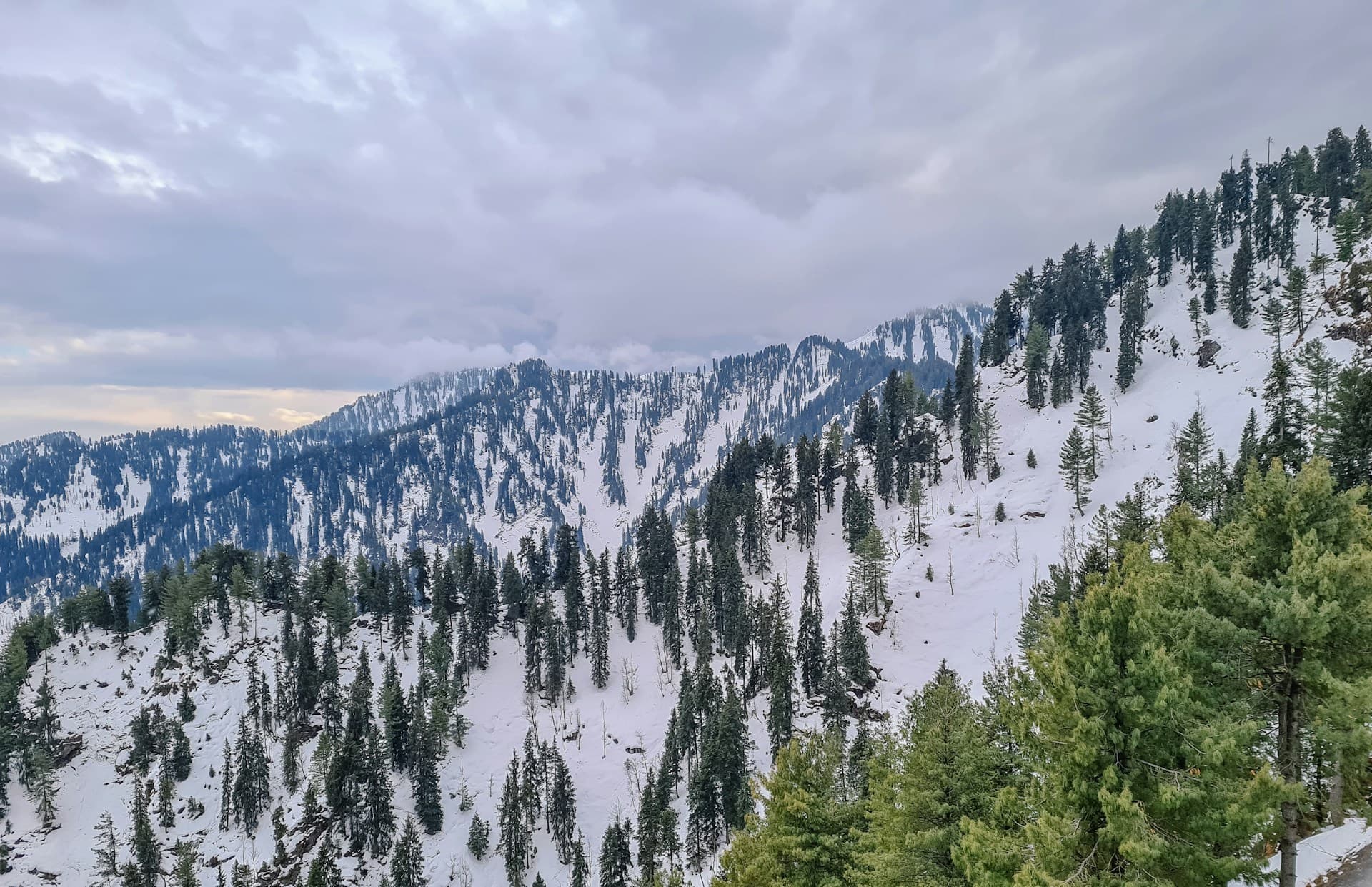
Complete guide to snowfall in Nathia Gali 2026-27. When snow starts, peak snowfall months, road conditions, what to pack, best properties for winter stays, and safety tips for mountain travel.
Nathia Gali's snowfall is the most searched and most anticipated weather event in Pakistan's northern hill stations. At 7,906 feet above sea level, Nathia Gali receives reliable, heavy snowfall every winter, transforming the pine forests and mountain slopes into the kind of white landscape that Pakistanis from Karachi, Lahore, and Islamabad travel hours to experience. If you are planning a winter visit in 2026-27, what you need is accurate information on timing, road conditions, property preparation requirements, and what the experience actually looks and feels like beyond the photographs.
This guide gives you the practical reality of snowfall in Nathia Gali, based on the actual climate pattern at this elevation, current infrastructure conditions, and the differences between properties that make winter genuinely comfortable and those that make it miserable.
When Does It Snow in Nathia Gali? Monthly Breakdown
Nathia Gali's snowfall season follows a consistent pattern year to year, with only the exact timing and intensity of individual events varying. The pattern from historical climate data and current weather monitoring gives these typical windows:
| Month | Temperature Range | Snowfall Likelihood | What to Expect |
|---|---|---|---|
| November | -1°C to 10°C | Light snow possible from late November | First snowfall typically arrives; snow may not settle at lower elevations |
| December | -5°C to 5°C | Moderate to heavy; main season begins mid-December | Reliable snowfall from mid-month; roads can be affected |
| January | -7°C to 2°C | Peak snowfall month; deepest accumulation | Heaviest and most frequent snowfall; maximum snow depth |
| February | -5°C to 6°C | Heavy snowfall continues; gradual easing late month | Still significant snow; late February can see first thaw signs |
| March | -1°C to 15°C | Light snow possible early March; rapidly diminishing | Snow melts; spring begins; trails start reopening |
| April-May | 5°C to 20°C | No snowfall | Full spring; wildflower season begins |
The peak snowfall period runs from mid-December to mid-February. January is consistently the month of deepest snow accumulation at Nathia Gali's elevation. Snowfall in November is possible but not guaranteed to settle. March can bring light snow events early in the month but these are typically short-lived.
Important: exact snowfall dates vary year to year. The 2025-26 winter saw snowfall arriving in late November and extending through February with several significant events producing 30 to 60 centimetres of accumulation in January. Checking current weather forecasts through AccuWeather and OpenSnow within one to two weeks of your planned visit gives you the most accurate current-season picture. For the full seasonal breakdown across all months, the Nathia Gali weather and seasons guide covers every month in detail.
What the Snowfall Experience Is Actually Like
Most visitors who plan a winter trip to Nathia Gali for the snowfall experience arrive with an expectation shaped by photographs: pristine white forest, dramatic snow-covered peaks, and the magical quiet of a mountain covered in fresh snow. That experience is real, and it is genuinely extraordinary in Nathia Gali. But the reality also includes elements that photographs do not show, and understanding them turns a potentially frustrating trip into the experience visitors remember for years.
Fresh Snowfall vs Accumulated Snow
The most photogenic and most atmospheric experience is fresh snowfall, when snow is actively falling or has just settled on surfaces that have not yet been compacted by foot traffic or vehicle tyres. This window typically lasts 12 to 24 hours after a significant snowfall event. After that, the main road and bazaar areas see the snow compacted and partially cleared, while the forest paths and higher terrain retain the pristine condition longer.
This is why the visitors who get the full snowfall experience are those who are in Nathia Gali when a snowfall event occurs, not those who arrive after. Watching snowfall from a warm room and stepping out into a fresh white world in the morning is different from arriving to find compacted slush on the main road with white visible only on the surrounding slopes.
The full snowfall experience belongs to visitors who are already in Nathia Gali when snow falls — not those who arrive after the roads have been compacted.
Temperature and What It Means Practically
January temperatures at Nathia Gali regularly drop to minus seven or minus eight degrees Celsius overnight. Even December daytime temperatures sit between minus two and plus five degrees. This is significantly colder than most Pakistani visitors expect if their reference point is Murree or Islamabad winter temperatures. The cold is a feature for those who want a genuine mountain winter experience. It is a problem for those who arrive underprepared.
Properties without adequate heating infrastructure become acutely uncomfortable at these temperatures. Load-shedding compounds this: a property dependent on government electricity supply without generator backup loses heating capacity during power cuts, which are more frequent in winter in the mountain regions than in summer. This is the single most important factor that separates comfortable winter stays from miserable ones in Nathia Gali. Serene Heights was built as Pakistan's first luxury winter resort specifically to address this: full heating infrastructure and generator backup are standard across all units, not optional extras.
Road Conditions During Nathia Gali Snowfall Season
The Islamabad to Nathia Gali road via Murree remains driveable during most of the winter season, but requires different preparation and a different driving approach than a summer visit. The key distinction is between the Islamabad to Murree expressway section, which is typically cleared and gritted quickly after snowfall by highway authorities, and the Murree to Nathia Gali section through the Galyat hill stations, which can remain significantly more affected for 24 to 48 hours after heavy snowfall.
What You Need for the Mountain Drive in Winter
- Snow chains: Mandatory for the Galyat section after significant snowfall. Even if you are not required to have them by road authorities, they are essential for safety on the winding descent and ascent sections between hill stations.
- All-season or winter tyres: If snow chains are not available, all-season tyres significantly improve grip over summer-compound tyres on cold mountain roads.
- Full fuel tank from Islamabad: Fuel options diminish significantly past Murree. Fill up in Islamabad or at the last Murree station before continuing.
- Phone navigation offline maps downloaded: GPS connectivity can drop in heavy snowfall conditions. Download offline maps for the Murree-Nathia Gali section before departing.
- Check road status before leaving: NHPA (National Highway and Motorway Police) posts road closure information on their social channels and website. Check within two hours of your planned departure in winter conditions.
When Roads Close
Temporary road closures during or immediately after heavy snowfall events do occur on the Galyat mountain sections. These are typically resolved within 24 to 48 hours as snow clearance equipment works through the route. Visitors who arrive in Nathia Gali before a closure and have accommodation in place are usually unaffected. Those who attempt to drive through during active heavy snowfall or immediately after a major event before clearance is complete face the most serious risks.
Building one to two days of flexibility into your winter trip plan, so that a weather delay does not force you to drive under unsafe conditions, is the single most important practical preparation for a Nathia Gali winter visit.
What to Pack for Nathia Gali Snowfall Season
- Thermal base layers: Moisture-wicking thermal underlayers are the foundation of functional winter mountain clothing. Cotton base layers retain moisture and become cold when you perspire; synthetic or wool thermals do not.
- Insulated mid-layer: A down jacket or fleece for indoor warmth and as a mid-layer under your outer shell.
- Waterproof outer shell: A waterproof jacket and waterproof trousers for time spent in snowfall or compacted snow.
- Waterproof boots with grip: Regular shoes become hazardous in compacted snow and immediately become wet and cold in fresh snow. Waterproof ankle boots with good sole grip are non-negotiable.
- Gloves, hat, and warm socks: Extremities lose heat fastest. Thermal socks, waterproof gloves, and a wool or fleece hat should be treated as mandatory rather than optional for any winter mountain visit.
- Portable battery pack: Cold temperatures reduce phone battery life significantly. A portable charger keeps your phone usable for navigation and communication throughout a day outdoors.
Activities Available During Nathia Gali Snowfall Season
Winter does not eliminate Nathia Gali's activity programme. It changes it. Some summer activities become unavailable or inadvisable, while winter-specific activities and experiences become the focus.
What You Can Still Do
- Forest snow walks: The pine forests covered in fresh snow are beautiful and walkable on their lower sections without technical equipment. Short walks from the main road into the forest provide the full snowfall aesthetic experience with minimal physical risk.
- Mushkpuri Top (experienced hikers only in winter): The Mushkpuri trail can be attempted in dry winter conditions by experienced hikers with appropriate footwear and equipment. It is not advisable during or immediately after active snowfall.
- On-site resort activities: Properties like Serene Heights maintain their full indoor amenity programme through winter: pool, gym, spa, climbing wall, dining. A full resort day without leaving the property is entirely viable on heavy snowfall days when outdoor conditions are severe.
- Snowman building and casual snow play: Practically everyone who visits with children spends time in the snow on the property grounds or adjacent areas. No special equipment required beyond appropriate clothing.
What Is Restricted or Closed in Winter
- Miranjani Summit Trek: The Miranjani summit trail becomes hazardous and is not recommended in winter due to ice and snow on the steep upper sections without mountaineering equipment.
- Chairlift at Ayubia: The Ayubia chairlift typically does not operate during winter snowfall or in the immediately preceding and following weeks.
- Some restaurants and small businesses: The Nathia Gali bazaar sees reduced commercial activity in deep winter. Properties with on-site dining become more important for guests who need reliable food service without depending on the bazaar.
Choosing a Property for a Winter Snowfall Visit
A winter stay in Nathia Gali reveals the performance gap between properties much more clearly than a summer visit. The critical questions before booking any Nathia Gali property for winter are: what is the heating system and is it independent of government electricity supply? Is there generator backup for power cuts? Does the property have on-site dining so guests do not need to go out in snowfall for meals? Is the parking area accessible after snowfall?
Serene Heights was designed and built to answer all four questions affirmatively. This is why it positions as Pakistan's first luxury winter resort rather than simply a hotel that operates in winter. The full amenity and infrastructure specification covers the specifics. For guests planning a December or January visit specifically to experience the snowfall, these infrastructure details determine whether the visit is the experience they planned for or a cold, uncomfortable approximation of it.
EXPERIENCE THE 2026-27 SNOWFALL SEASON
View winter availability at Pakistan's first luxury winter resort.
Frequently Asked Questions
What month has the most snowfall in Nathia Gali?
January consistently produces the heaviest snowfall accumulation in Nathia Gali. Mid-January through the end of January represents the peak of the snowfall season. December mid-month through January is the full window for reliably experiencing snowfall. February can still produce significant events but the frequency and depth typically diminish through the month.
Is the road to Nathia Gali open in winter?
The road is generally open throughout winter but can close temporarily during or immediately after heavy snowfall events, particularly the Murree to Nathia Gali section. Closures are typically resolved within 24 to 48 hours. Driving with snow chains or appropriate tyres, checking NHPA road status before departure, and traveling in daylight hours significantly reduces winter driving risk on this route.
Is Nathia Gali worth visiting in winter?
For visitors who arrive prepared and stay in a property with adequate winter infrastructure, a Nathia Gali winter visit during snowfall season is one of the most visually spectacular experiences available in Pakistan. The combination of mountain scenery under fresh snow, pine forests covered in white, and the cool quiet of a hill station out of summer season creates a genuinely different and often more memorable experience than a summer visit. The quality of the experience depends heavily on property choice and arrival preparation.
Experience the 2026-27 snowfall season at Pakistan's first luxury winter resort: view winter availability at Serene Heights Nathia Gali.
For full trip planning, see the complete Nathia Gali weather guide and our guide to what to do in Nathia Gali in winter.
Interested in Serene Heights?
Get in touch with our team to learn more about Smart Property Units, payment plans, and site visits.
Contact Us